A routing rulebook
Territory, account ownership, fallback, and reassignment rules with a business owner.

Turn an incoming lead into an assigned, traceable next step without hiding uncertain matches in someone’s inbox.

Territory rules, existing account ownership, and incomplete forms rarely line up neatly. A simple round-robin can create duplicate outreach or send a valuable inquiry to someone who cannot act on it.
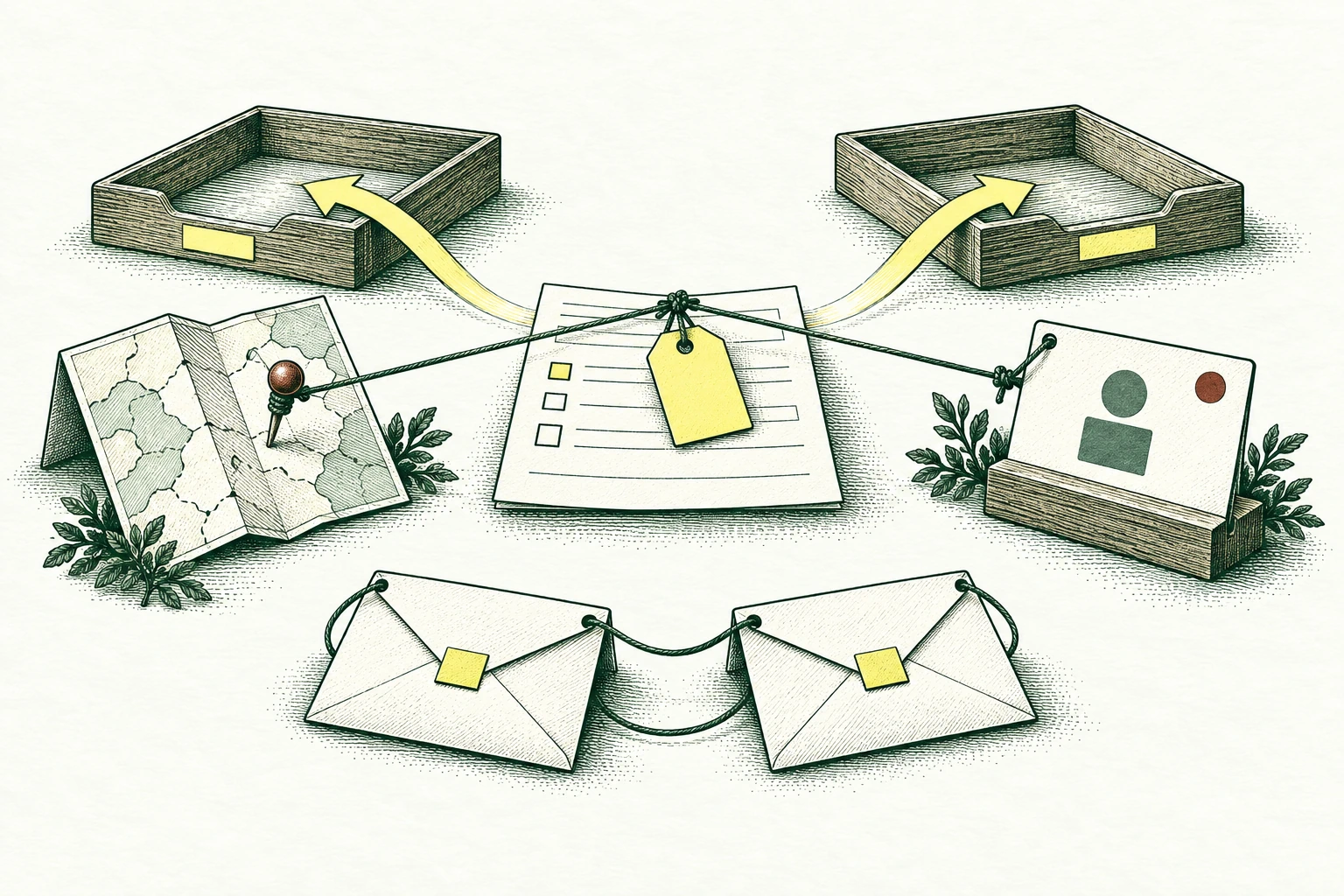
Describe how ownership is decided today and a recent example that landed with the wrong person.
A new lead arrives from an approved source.
Check existing account ownership, territory, required fields, and exclusion rules.
Prepare an assignment with a reason and an acknowledgment draft if in scope.
A sales owner resolves conflicts; unclear matches wait in a visible queue.
Where are territory rules and account ownership recorded, and how often do they change?
What should happen to a lead that matches an existing account or arrives incomplete?
Who receives a lead when the assigned owner is unavailable, and how is that handoff visible?
Territory, account ownership, fallback, and reassignment rules with a business owner.
A scoped CRM or task-system handoff with source, decision reason, and duplicate protection.
A visible home for incomplete forms, conflicting owners, and unavailable destinations.
Agree the trigger, source systems, reviewer, and acceptance criteria. Build the bounded preparation path, then test it with the person who will own it.
Test a returning account, a missing territory, duplicate submissions, and an unavailable assigned owner.
No message reaches a prospect until the sales owner has approved the template and the send rules. Marketing consent, contact eligibility, and external outreach stay separate decisions with named owners.
See how acceptance evidence works ↗Yes, when useful, with uncertainty visible. Clear account and territory rules should remain deterministic.
Not by default. It can prepare an acknowledgment draft for the owner to send. Sending automatically is a separate decision that needs the channel, template, suppression rules, and stop conditions agreed with the sales owner first.