A requirements map
A specific checklist, document types, versions, and definitions of missing or ambiguous evidence.

Check incoming documents against an agreed requirements list, with findings a reviewer can trace back to the source.
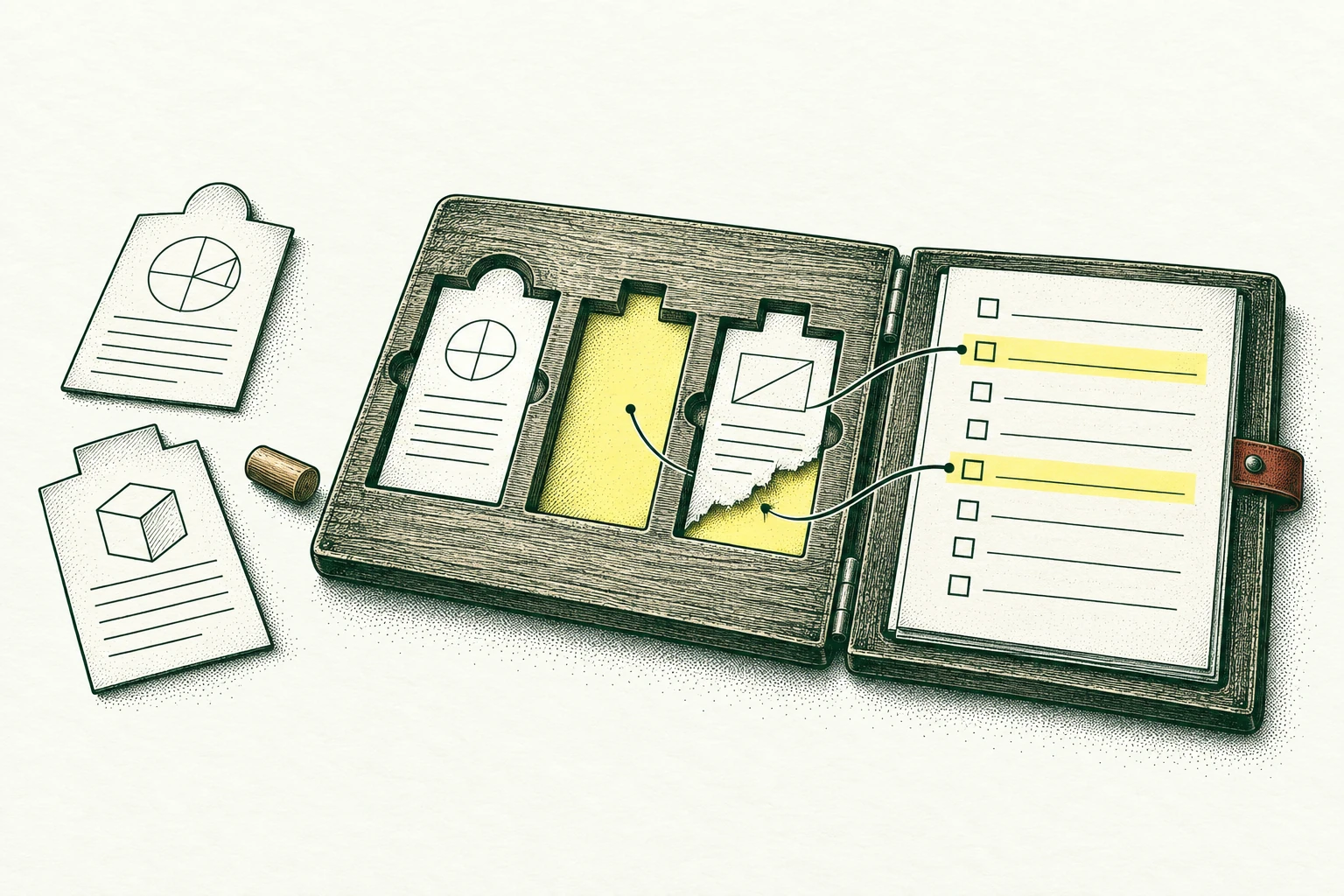
A document may look complete while omitting one essential field. Skimming repeatedly is tiring, and a generic summary does not tell a reviewer which requirement is met or missing. The useful output is a source-linked checklist, not an unexplained pass.
Describe the document and the exact checklist a person uses today. Use redacted examples when sample review is agreed.
A document enters the approved review channel.
Compare its contents with a versioned requirements checklist.
Prepare findings with source passages, missing fields, and uncertainty notes.
A qualified reviewer decides whether to accept it or ask for changes.
Which document and checklist does a reviewer use today, and how many items are usually missing?
What should the check do with an unreadable page, an outdated version, or an ambiguous requirement?
Who receives the findings, and what evidence do they need next to each requirement?
A specific checklist, document types, versions, and definitions of missing or ambiguous evidence.
A review view or report that keeps the document and each proposed finding together.
Tests for poor scans, conflicting statements, absent pages, and document changes.
Agree the trigger, source systems, reviewer, and acceptance criteria. Build the bounded preparation path, then test it with the person who will own it.
Test a missing page, an outdated version, unreadable text, and a requirement stated ambiguously.
This is not a legal opinion, compliance certification, fraud guarantee, or substitute for professional document review. Unreadable evidence should stop the check.
See how acceptance evidence works ↗Potentially, with an extraction step. Quality varies; unreadable portions and low-confidence findings need a review route.
No automatic legal approval is implied. It can prepare findings for the responsible reviewer.