Role-based task plans
Agreed task templates, dependencies, owners, and rescheduling rules.

Coordinate onboarding tasks around a start date while keeping access and people decisions with their owners.

The welcome message is easy to remember. Equipment, manager tasks, policy acknowledgments, and access requests are scattered across teams. When a start date changes, the checklist rarely changes everywhere at once.
Walk through one role’s onboarding journey and where HR, the manager, IT, and the new starter depend on each other.
An authorized owner confirms a new starter and start date.
Select role-appropriate tasks and check responsible teams and dependencies.
Prepare equipment, training, and access-request tasks with due dates.
Managers and system owners approve access and confirm completion.
Which role’s onboarding involves the most teams, and where does the checklist live today?
What must happen when a start date moves, a role changes, or an offer is withdrawn?
Who grants access and equipment, and which steps must stay with HR, IT, or the manager?
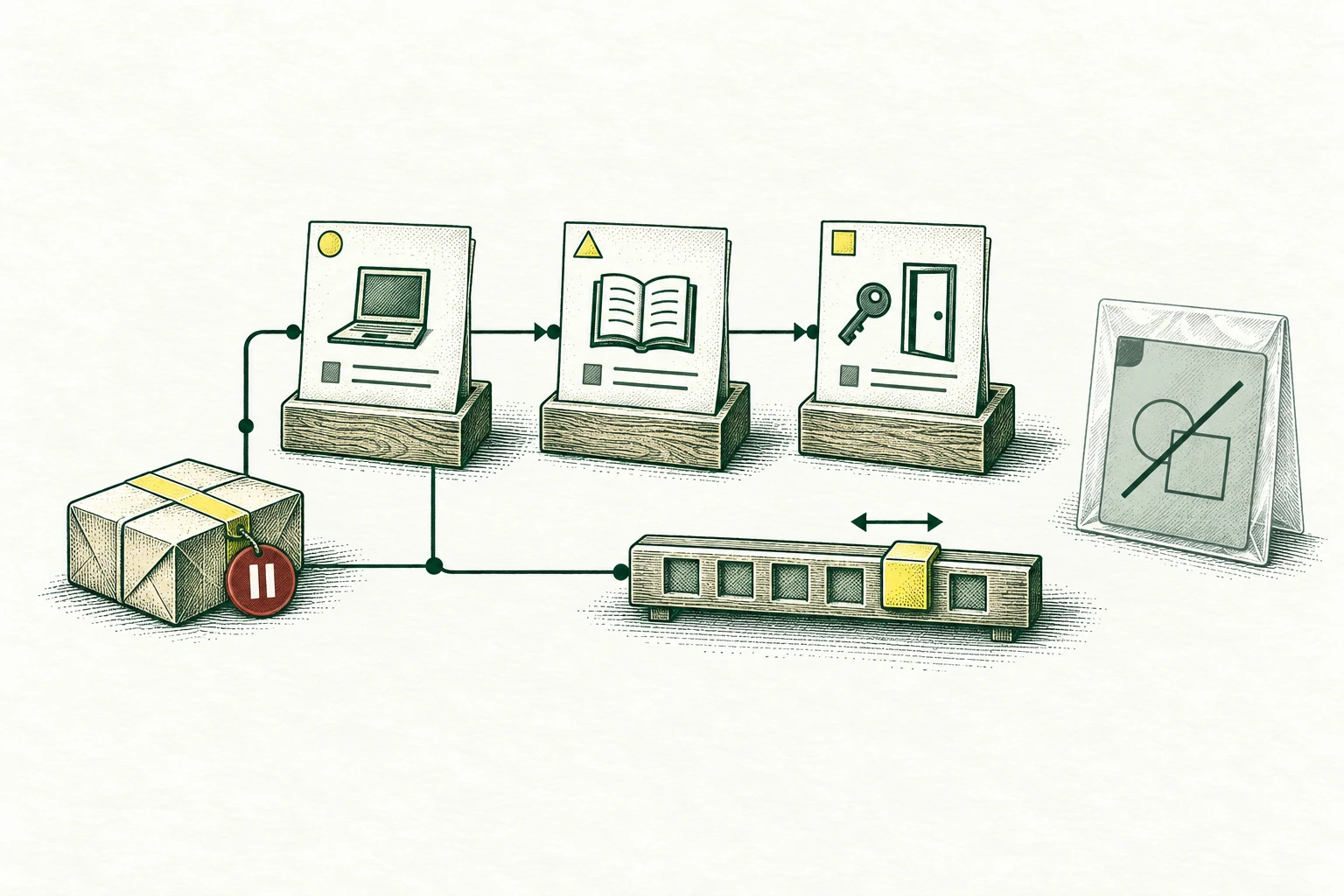
Agreed task templates, dependencies, owners, and rescheduling rules.
A scoped workflow into existing task, HR, or service systems with status visibility.
Handling for changed dates, missing information, delayed equipment, and tasks no longer needed.
Agree the trigger, source systems, reviewer, and acceptance criteria. Build the bounded preparation path, then test it with the person who will own it.
Test a delayed start, a role change, a missing manager, and cancellation before access has been provisioned.
No autonomous hiring, eligibility decision, or privileged access grant. Employee data requires minimization, appropriate access, and agreed retention.
See how acceptance evidence works ↗It can prepare or route access requests. Account creation and permission changes require explicit authorization and appropriate controls.
The initial aim is coordination around existing tools, not replacing the system of record.