A prepared working record
A change-review record and failure queue, plus a checklist of what another company would have to validate independently.

One company wants to update its internal assistant. A reusable evaluation method is helpful, but the other companies ask different questions.
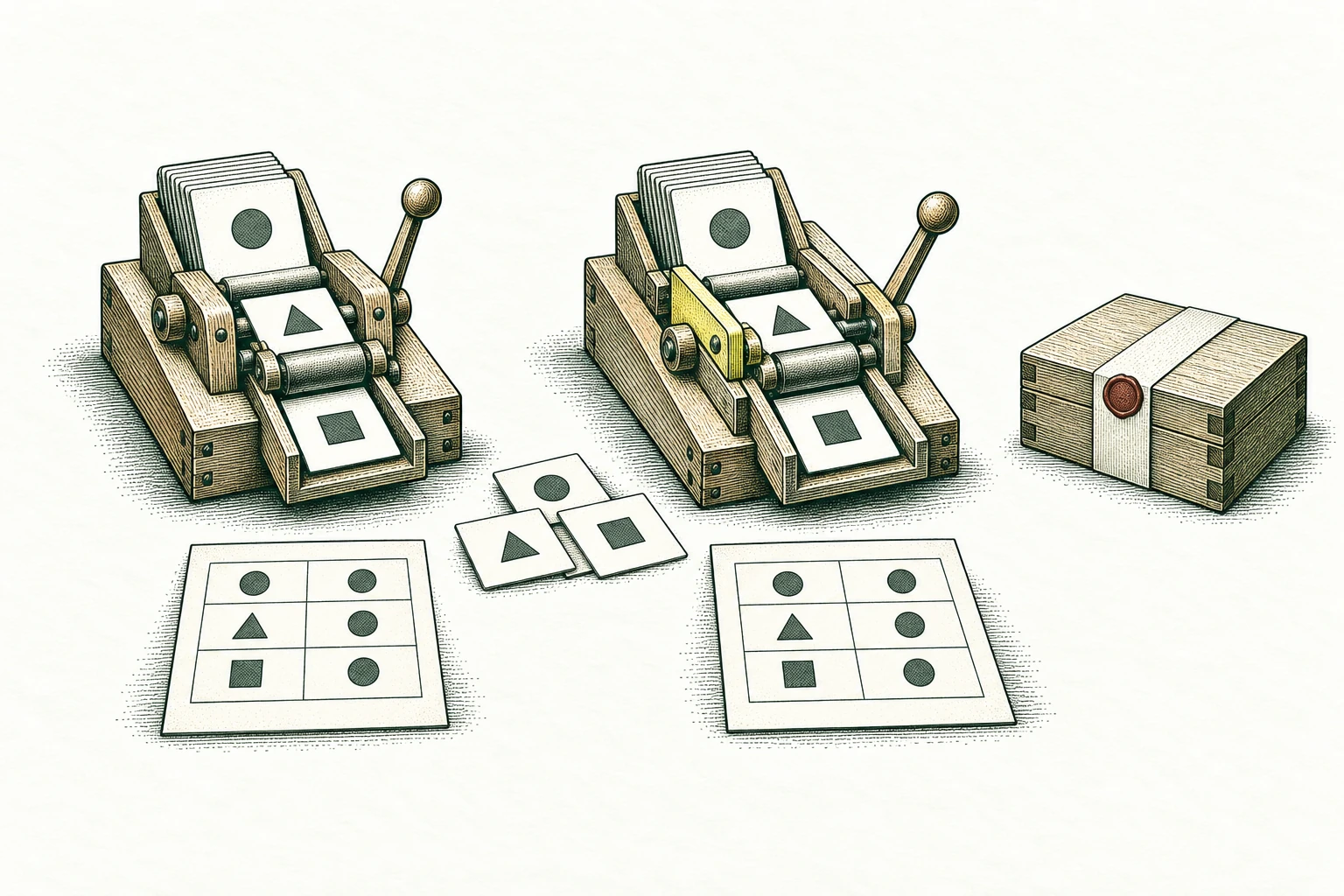
One possible workflow, with the preparation and review responsibilities made clear.
A sanitized, company-specific question set, approved source versions, known failures, and baseline and candidate model configurations.
Compare the same tasks with source support, refusal behavior, review effort, latency, and cost recorded as relevant. Keep failure categories and sampling limits visible.
A change-review record and failure queue, plus a checklist of what another company would have to validate independently.
The local AI workflow owner judges regressions; the authorized technology owner separately decides whether to approve a rollout.
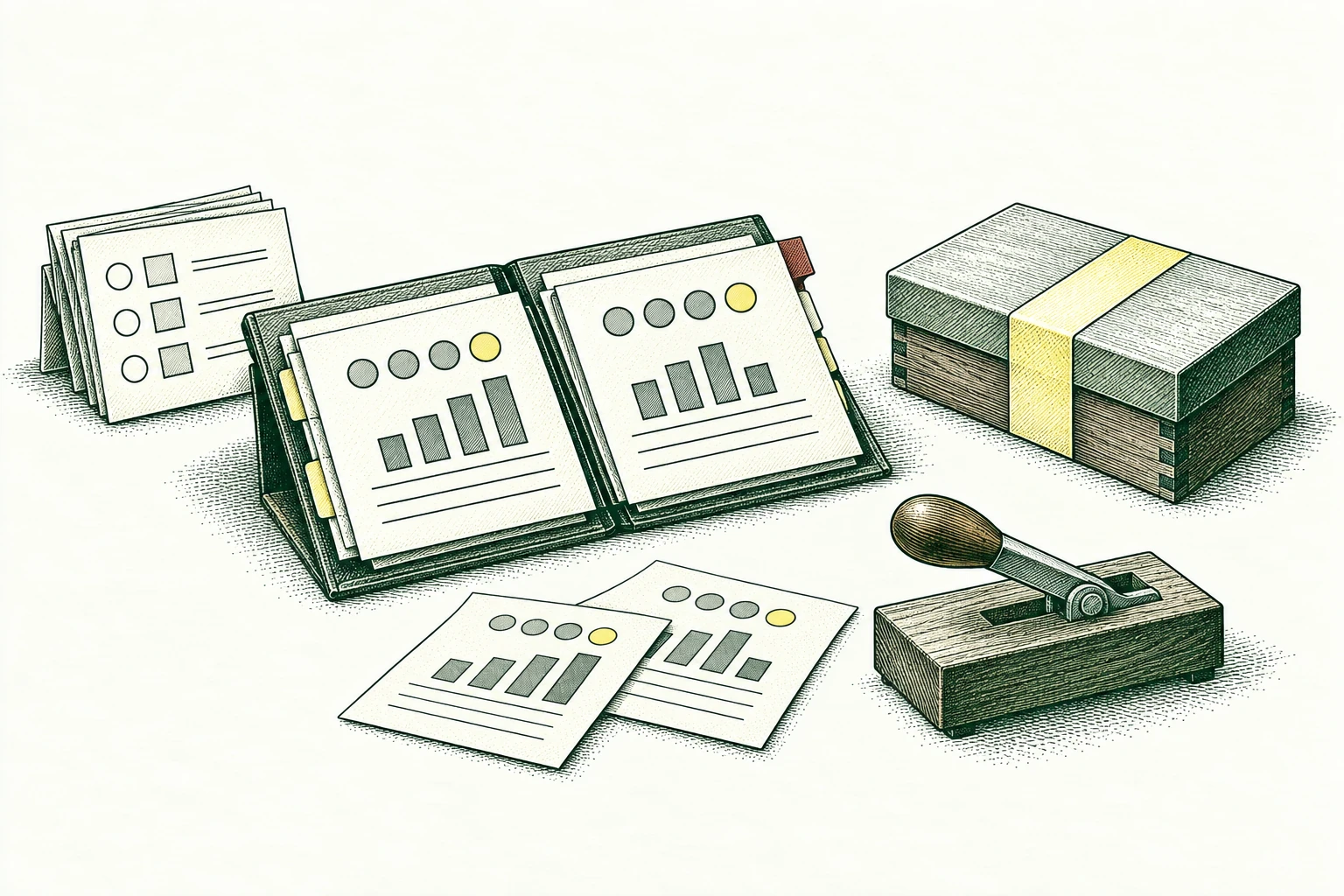
A change-review record and failure queue, plus a checklist of what another company would have to validate independently.
The local AI workflow owner judges regressions; the authorized technology owner separately decides whether to approve a rollout.
A strong result in one company is not portfolio-wide evidence. Production changes require a separate decision.
A candidate’s use of an obsolete policy in an exception remains visible as a separate failure for the local owner to assess.
Try a candidate that answers routine questions well but quotes an obsolete policy in a sensitive exception. Keep that failure separate from the average and ask the local owner whether it blocks the change.
A strong result in one company is not portfolio-wide evidence. Production changes require a separate decision.
How we validate the work ↗Start with a general outline of this workflow and the team that owns it.
Plan this workflow ↗Which company-specific questions and known failures should baseline and candidate both face?
Which source versions and acceptance criteria will the local workflow owner use?
Who assesses regressions, and who separately decides whether to approve a rollout?
A change-review record, failure queue, and checklist for separate company validation.
Local AI workflow owner.
A strong result in one company is not portfolio-wide evidence. Production changes require a separate decision.
Try a candidate that answers routine questions well but quotes an obsolete policy in a sensitive exception. Keep that failure separate from the average and ask the local owner whether it blocks the change.
A candidate’s use of an obsolete policy in an exception remains visible as a separate failure for the local owner to assess. Agree this acceptance check before work starts.